Zeke's FC RX-7 Project
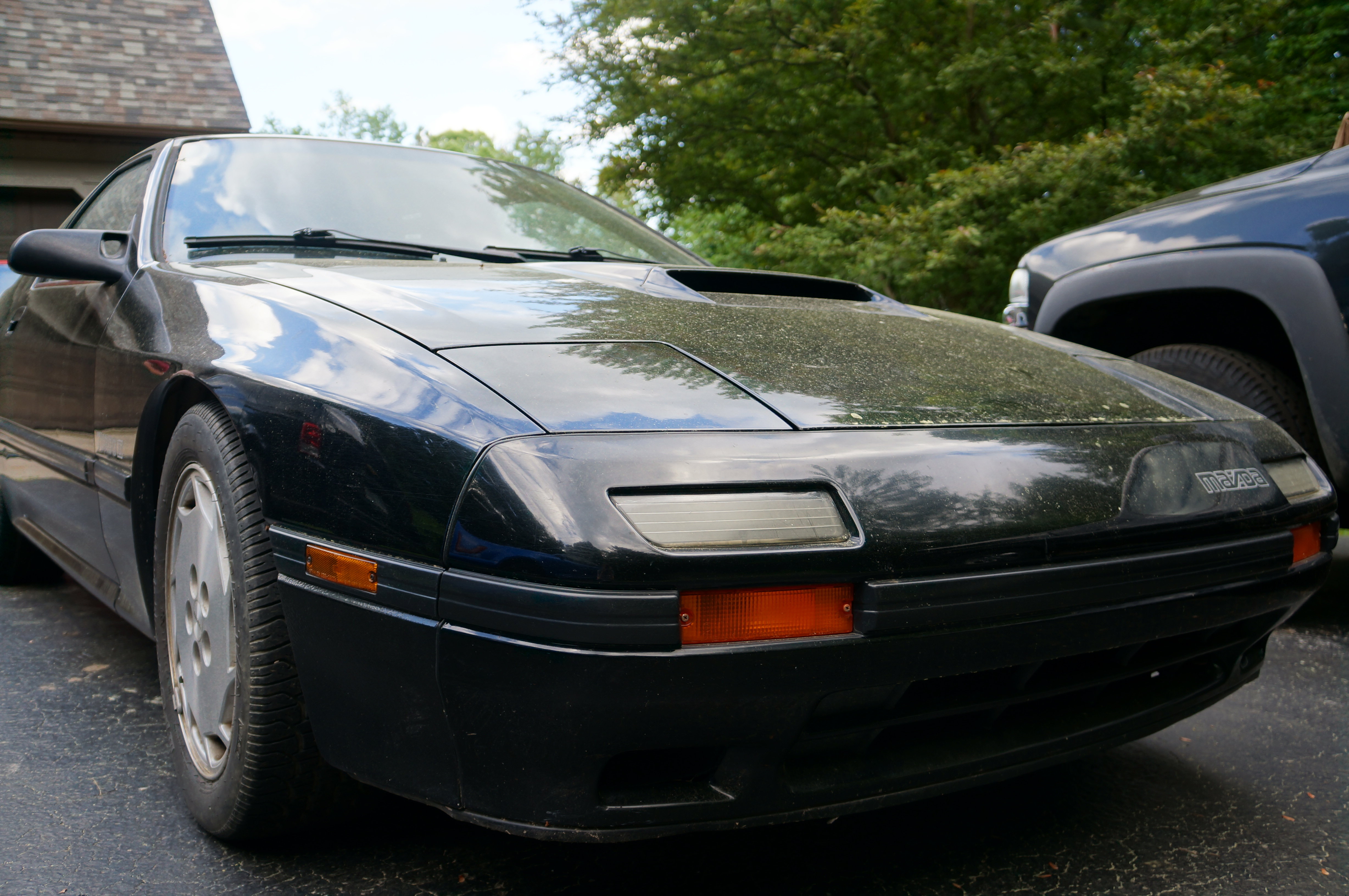
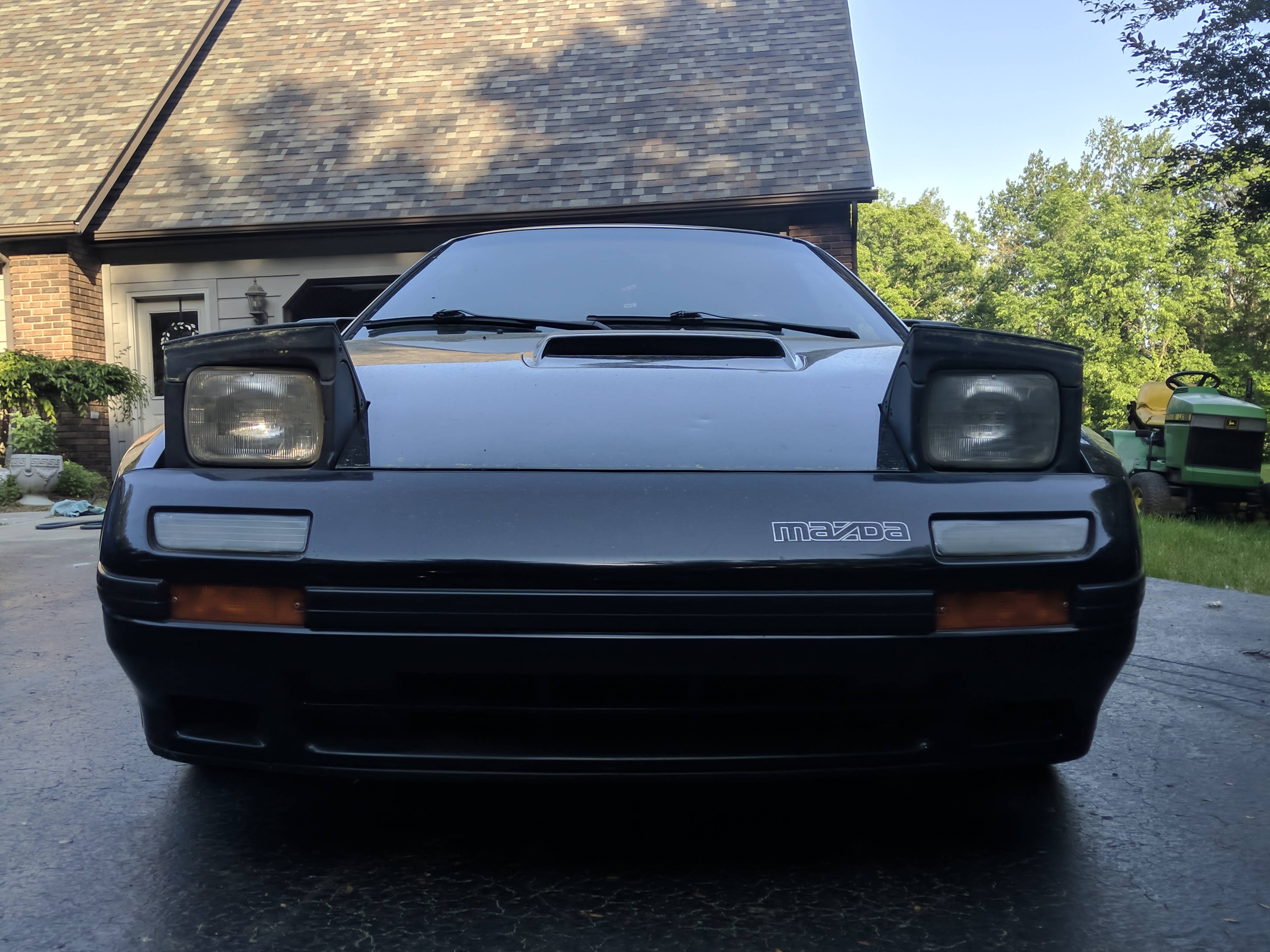
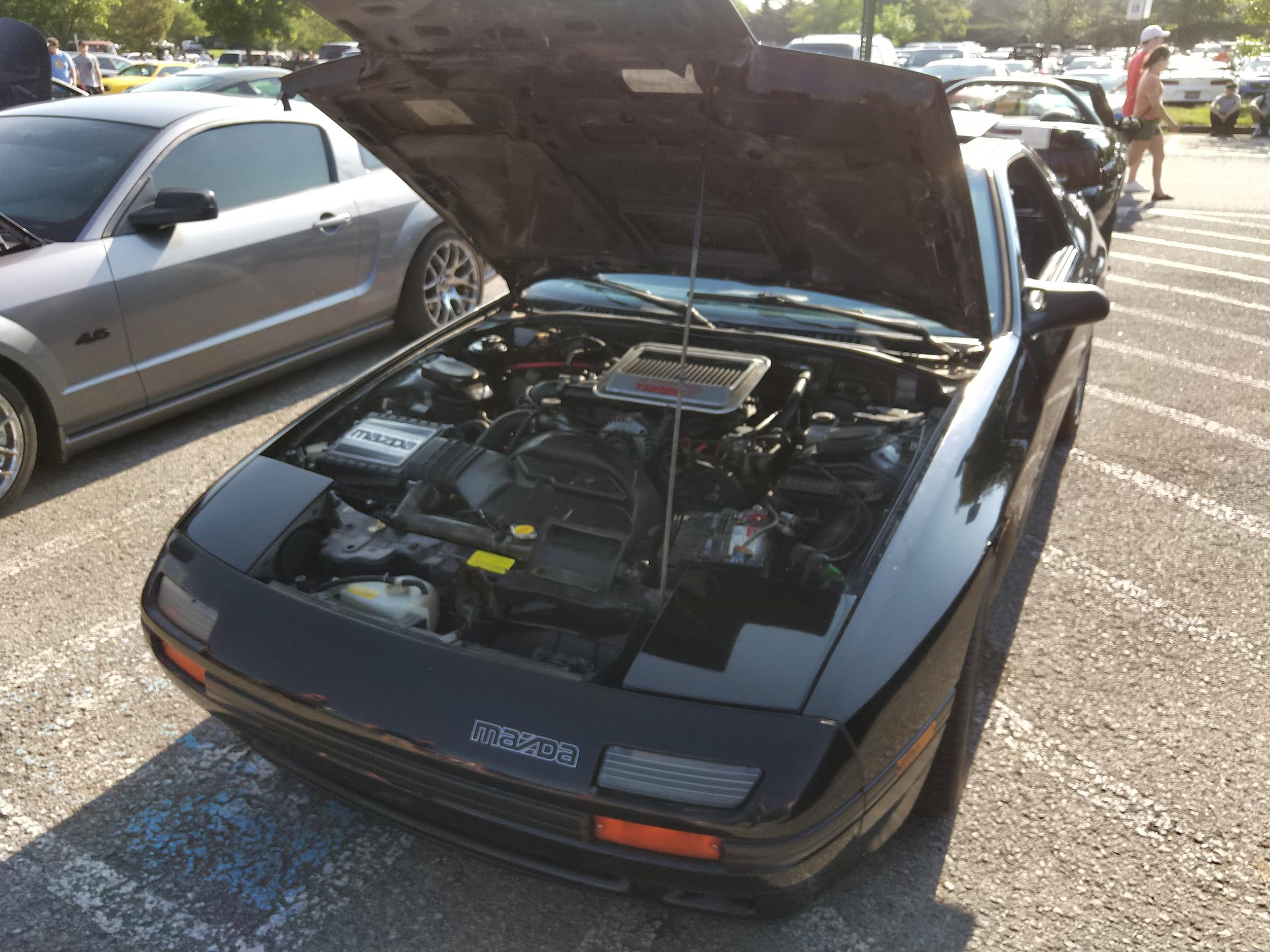
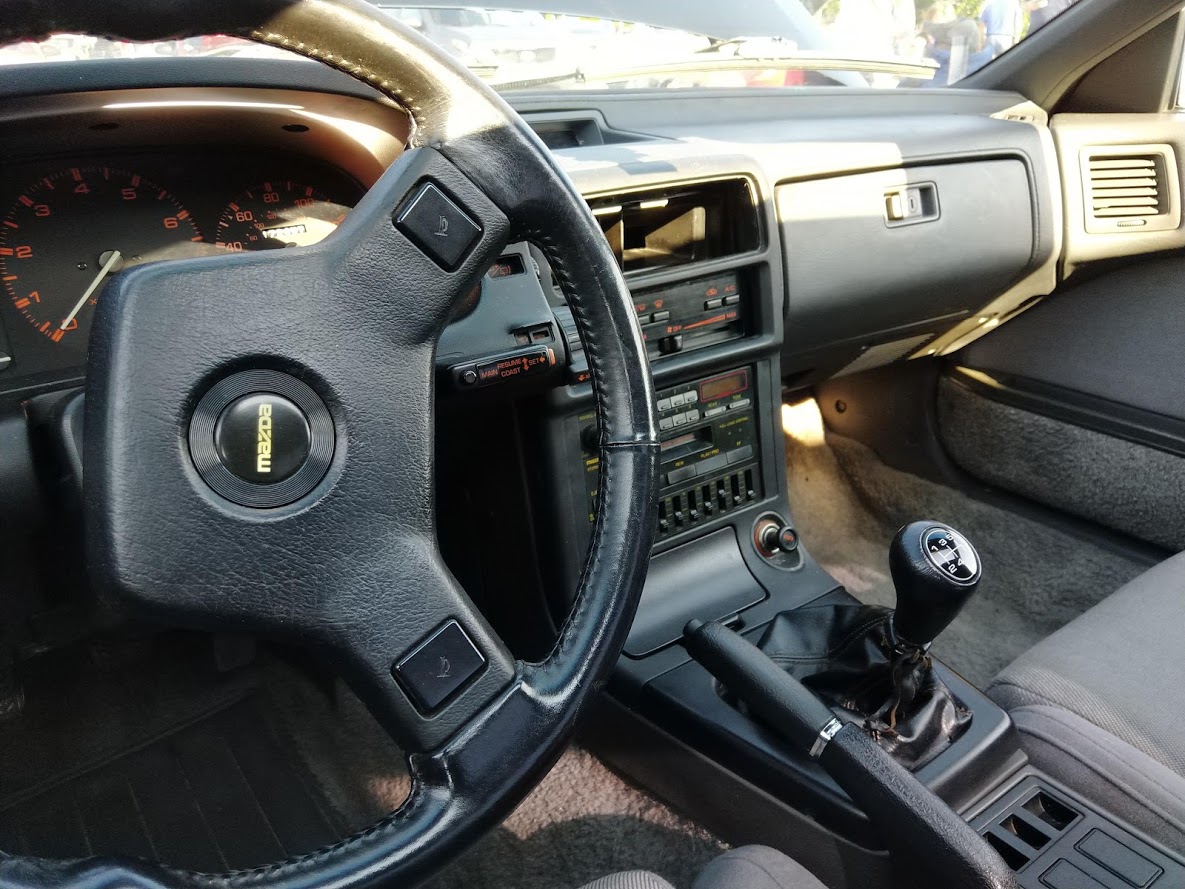
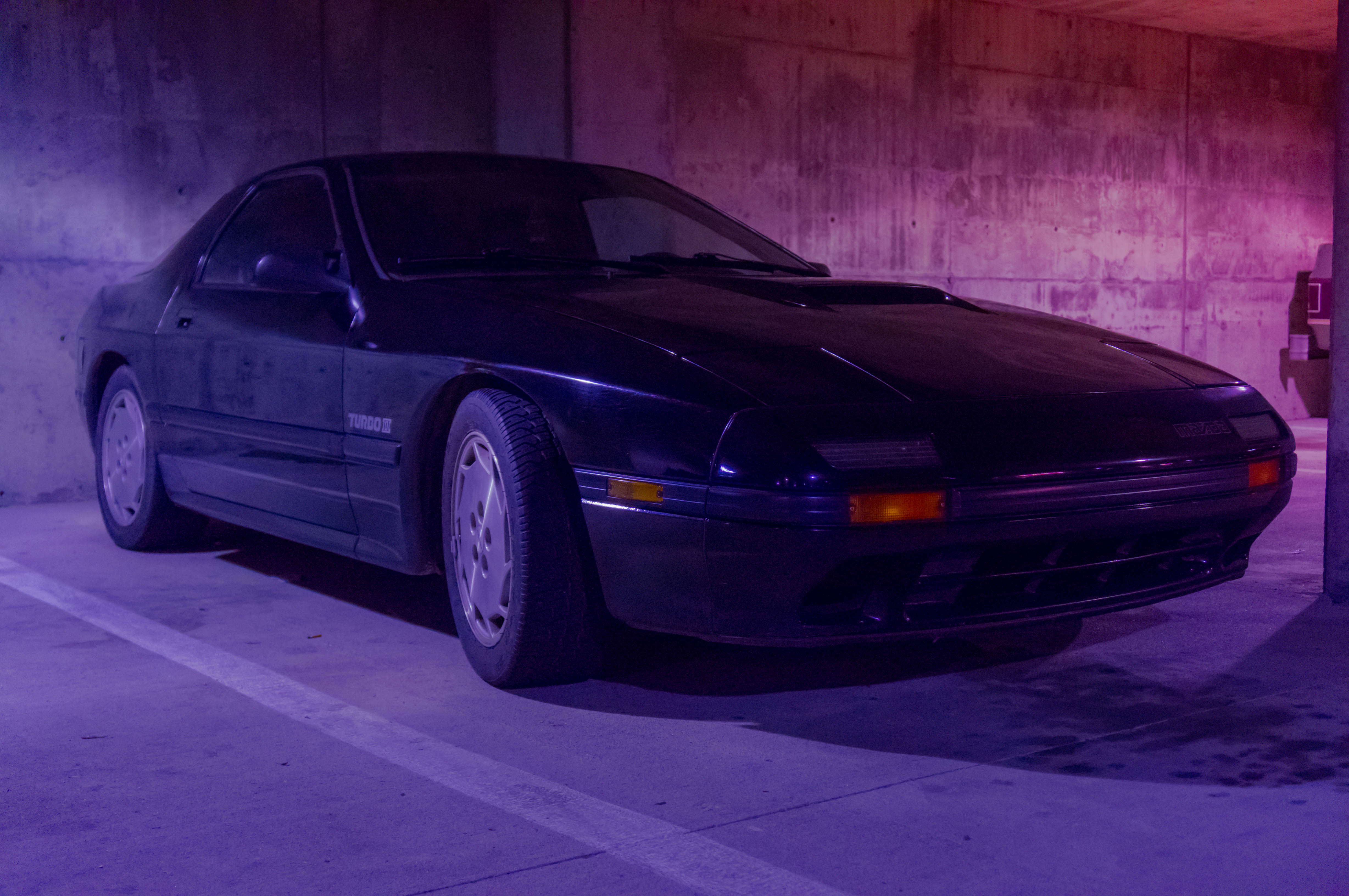
the car.
This is a 1987 Mazda RX-7 Turbo II, but you already knew that. This particular Turbo II is mine, and I guess it’s story is now mine as well. Before we get into that, I probably should at least provide some background on the car.
I previously had purchased a 1990 RX-7 GTU to swap in a 13bt engine into like all the cool kids do. It would have been a fun project to learn about the FC platform and also get a fun car for cheap, or so I thought. By the time I had purchased my car, import engines were starting to go up in value, and short of purchasing all the parts to cobble together my own Turbo engine there wasn’t a financially viable way for me to get a hold of one. So I set forth on Craigslist searching for new engines hoping one would come up, and one day I saw it: a near stock RX-7 Turbo for $5000. It had some mileage on it, and it certainly was none the worse for wear, but this was my shot at getting my dream car and I wouldn’t have to spend as much effort undoing modifications to boot. In short, I *had* to have this car, and because the seller wasn’t answering my calls or messages I resorted to something like three google voice numbers in a hope one might get a response.
Eventually, I did.
The next day, I drove the hour northwest to Clarksville TN to look at the car. Right off the bat, I could tell it wasn’t running correctly. The idle was jumping all over the place and was running rich. I drove it around the block, and it sputtered and burned oil the entire way. The interior was in fantastic shape, minus some missing vents and the radio, and the exterior, while oxidised and scratched over the years and mileage, wasn’t unsavable. I gave a low offer, $3000. If you are thinking that is more than the car is worth, you would be mostly correct. I knew that much, but in my head I knew that I would never get another shot at getting what is almost the perfect example my dream car. The seller accepted, and I readied myself for the one hour trip back to Nashville.
I didn’t even make it five minutes.
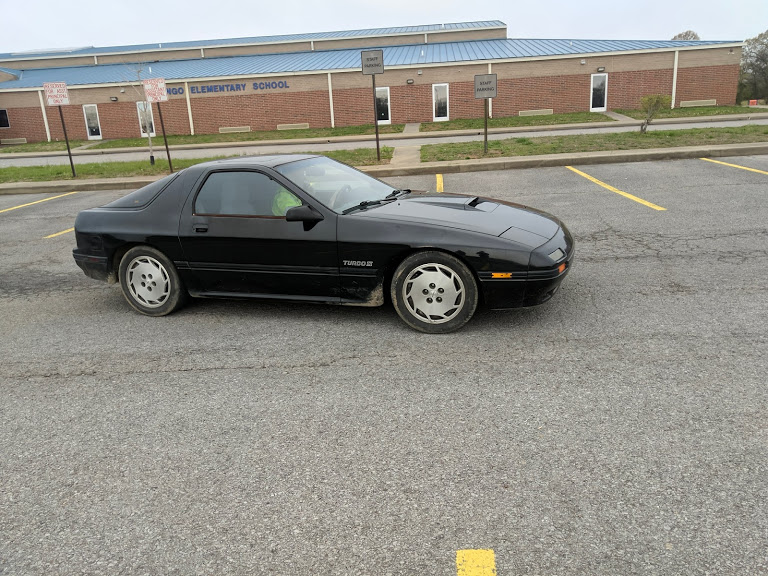
the problems.
Right off the bat, my braking system failed. The car was leaking brake fluid at a fast pace, and it was definitely not sustainable to make it back to the city. That was the first, but far from the last tow the car received.
I started out taking an inventory of problems the car had that would need repair on an order of priority. That isn’t to say I followed that order, I sort have been completing the tasks when I get to them. A full up to date list of this can be found at this google doc.
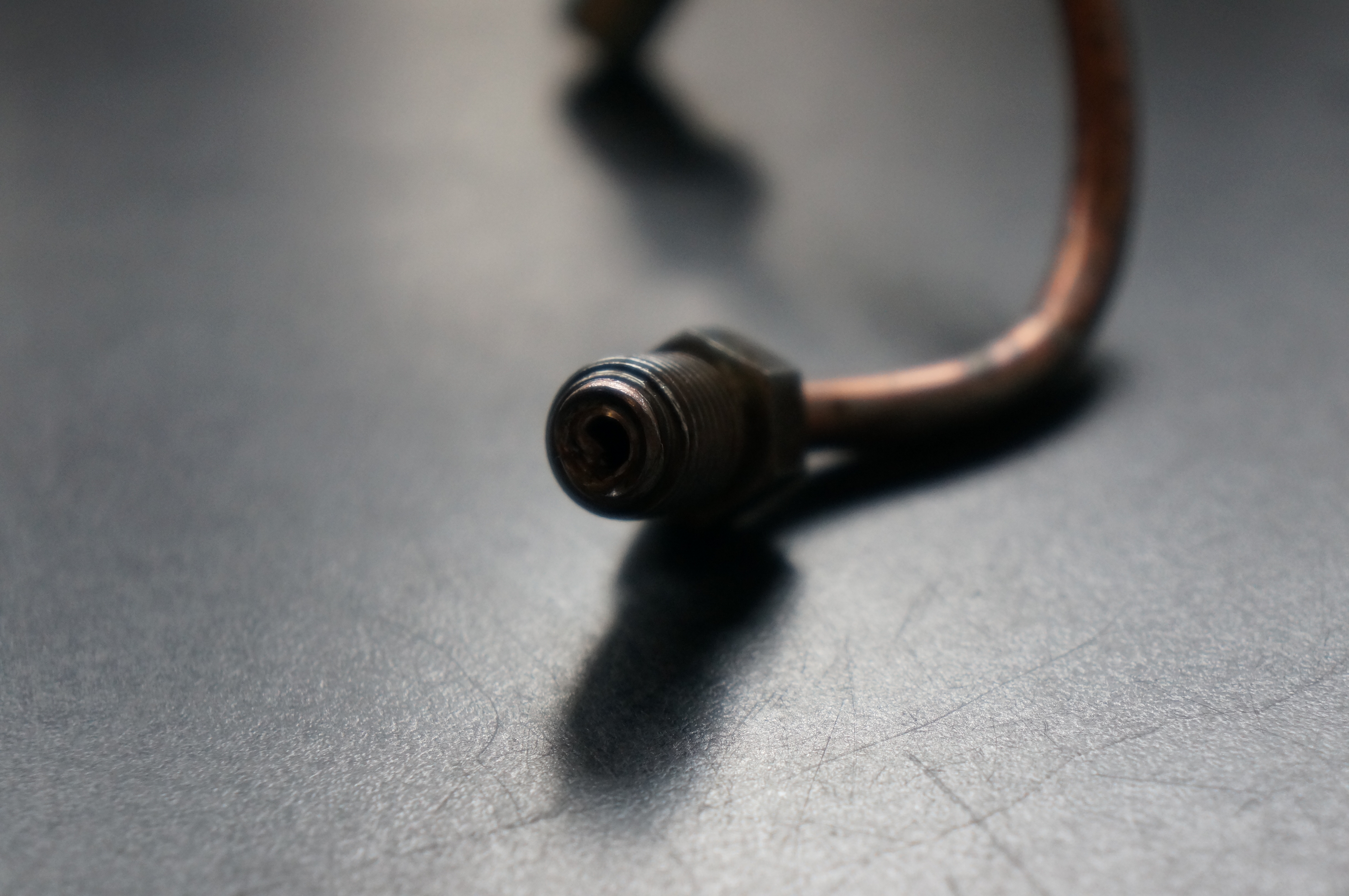
The first priority was to fix the brakes, as testing couldn’t be done without being able to drive the car. This ended up being a simple fitting that wasn’t flared correctly, and was repaired easily.
After that was done, the next step was to get the idle fixed. This was a bit of a headache, as all the factory idle systems were in place. The TPS is the obvious culprit, but nothing is simple on this car so naturally that didn’t fix it. The next step was the dashpot, which also was functioning normally. After a bit of troubleshooting, my dad went to grab the linkage connecting the second butterfly valve on the intake and noticed it was being held open with by some foliage that had been brought to the engine compartment by a rodent. With that cleaned up, it idled acceptably for an FC at 750rpms (no FC has a perfect idle, don’t believe people’s lies ;) )
The car had a known oil burn when I got it, so naturally I suspected the turbocharger. Before driving the car I needed to do a fluid change to make sure the previous owner hadn’t mucked anything up. The first drain was incredibly enlightening. The car has twice the oil capacity inside it! Luckily the car hadn’t been driven back or the control rings might not have made it, but they seem to be intact for now.
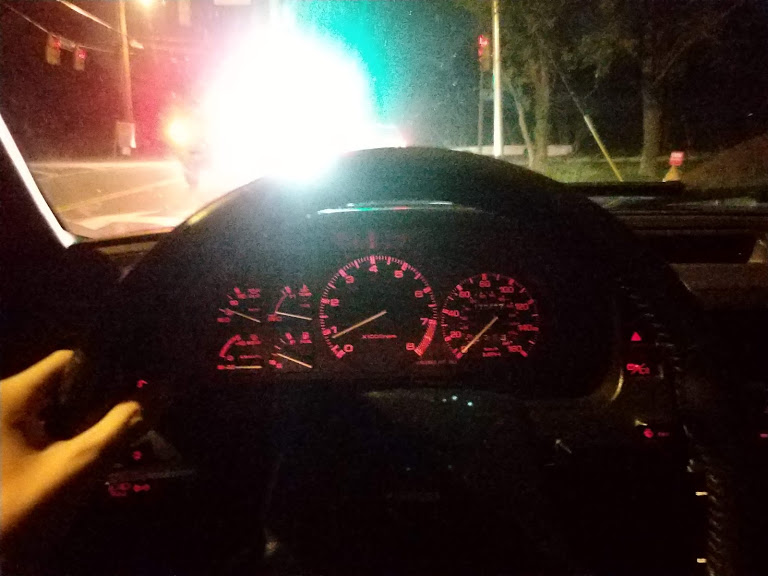
With that crisis avoided, we could finally go on a test drive! And while the car revved fine, it had a major problem. Whenever the car went on boost, it shuddered and died like it was running out of fuel. Bugger! Well, as long as you were smooth the car was at least drivable now! I quickly got the broken door handle repaired and drove it around running errands with my brother. After a nice drive with very little incidents (outside of me discovering the starter relay had gone off), I drove it home and parked it.
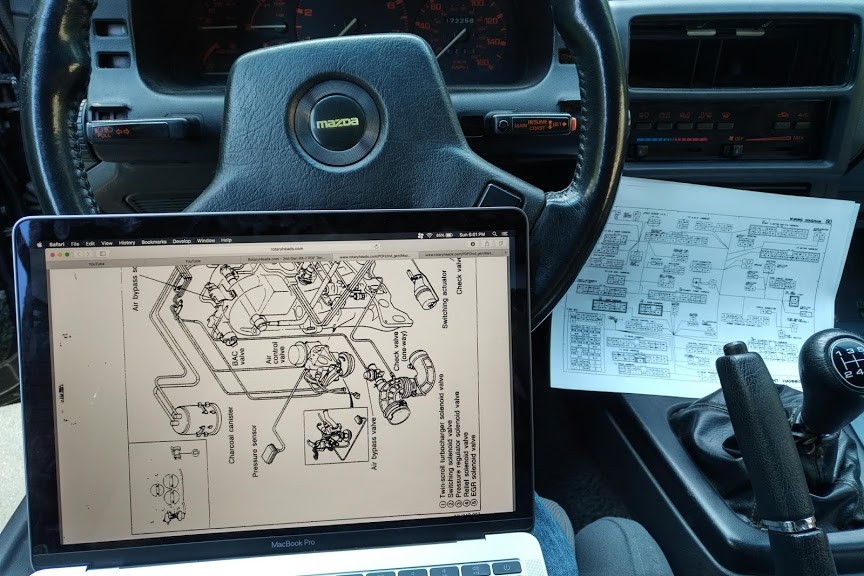
The next day, my mum wanted to go somewhere, so naturally I suggested taking the FC (as any excited car enthusiast would do when his toy is finally working). My rule is to never show off your car to friends and family because that’s when things break, and this is no exception. Ten miles down the road, my tachometer dropped to 0rpms, my fan indicator came on, my ignition failed, and my power steering controller started beeping error codes. Ugh. I got out, and a quick engine compartment inspection yielded naught, so I got back in and cranked it over. Lo and behold, the car started right up. Lovely, intermittent issues. My favourite. With no better ideas, I decided to carry on as I was doing and a quarter mile down the road it did it again. I waited another second, and it came back to life. One last shot and after another half mile it died and I coasted it into a carpark. After getting a nice tow home, I got out the multimeter and got to work. The main line that was suspect was the emissions power line, which controlled every device that failed (including the ignition). Sure enough, it was shorted to ground, but where?
After an eight hour search, we found the culprit.

The air bypass solenoid valve had obviously failed and was deleted by the previous owner. That isn’t an issue, as it isn’t absolutely necessary to have functional. What the P/O didn’t do correctly was the wiring delete. There isn’t a consequence for simply unplugging the device, but the previous owner mustn’t have realised that, as he cut off the connector and soldered the ends together, then wrapped it in electricians tape. Over my drive, this must have fallen off it’s perch and onto the hot exhaust manifold, melting the tape and shorting the connection, and with it all other emissions devices, to ground. All I had to do was unplug it and I was off to driving again.
The next day, I continued driving the FC. Outside of a rainstorm, it was a blast to drive and I was happy doing it. Then I decided to take it on a final drive before dark, and started it to warm up while I waited inside. When I came back out, the entire drive was filled with blue-tinged smoke. Oil. Lovely.
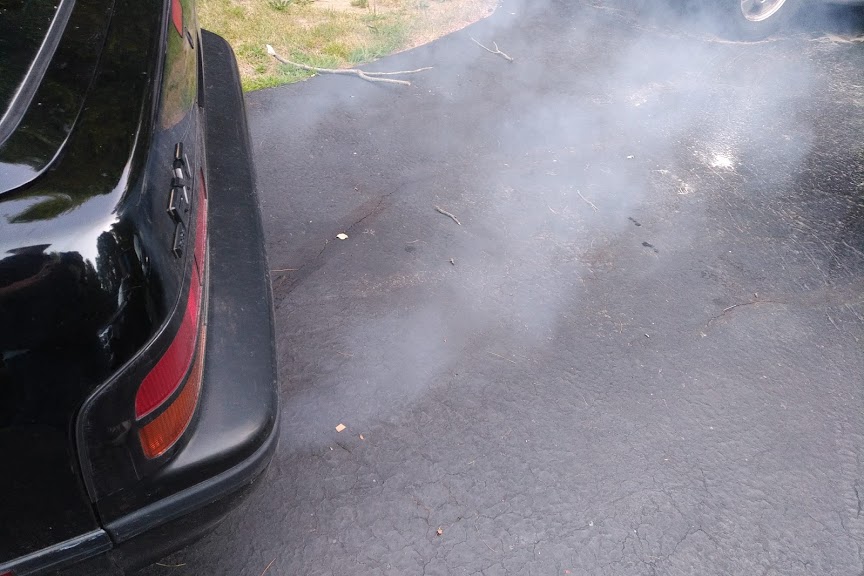
Naturally, the turbo that I considered before had given up the ghost. My intercooler trac was full of oil, and there was only one option left. I had purchased a rebuild kit off gpop shop, and all I needed to do was pull the turbo and begin anew. The first time was a challenge. This job isn’t as well documented as it should be, and the FSM’s suggestion to pull the engine is just mad. Still, we got the turbo off and rebuilt it according to the (not correct) instructions provided in the kit.
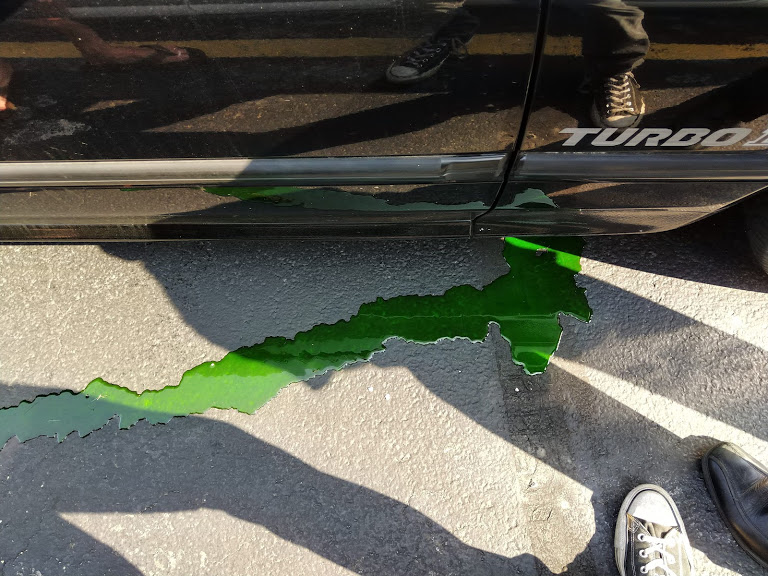
While reinstalling, we realised that the washer used to seal the banjo bolts on the coolant return are not the same one Mazda recommends, so both the one I got from Atkins and Mazda didn’t work. Our guestimate sizing wasn’t good enough, and caused a bit of a mess. One trip to match it at the hardware store and we were free of leaks.
Finally, I was back driving the 7 again, although something wasn’t right. Now the turbo wasn’t spooling almost at all and I made almost no boost. Still, one drive home and I thought I was at least set. Then the next day the turbo gave out and the blue smoke returned.
This time I decided to not take any risks, and instead got the turbo professionally rebuilt. After a quick reinstall, it was smoke city again. So having eliminated the turbo from the equation, it was time to come up with more specific criteria. First, the oil burns only at idle after sitting thirty seconds or so. It does not matter the oil pressure. Second, it goes away at speed, and the higher the engine is revved the less likely it is to come back. This rules out oil control rings as with that issue the higher the revs, the worst the burn. By this point, I was fed up with replacing turbos (it is a job to remove and install them), so I decided to leave it be for now. I got new tyres installed, and even took it to a couple of shows.
Remember the shuddering issue never actually got repaired and has persisted all this time. Every time it happened, I cringed a little, and I eventually just couldn’t deal with it any longer. Parking the car, I decided to investigate the issue. I had already ruled out ignition, as I had replaced the leading coils, and the fuel system was regrounded. While talking in an online chatroom, someone mentioned boost creep in passing. Then I remembered something: the FC Turbo has an overboost protection that cuts fuel to the primary rotor if the car goes over factory boost! From my Subaru ownership, I knew aftermarket exhausts caused this issue, and the FC had a Racing Beat 3” turboback. Doing a bit of research, I realised that higher boost levels are caused by unrestricting the exhaust on the RX-7, so while I normally would be running maybe 5.5psi of boost I was now running around 6-7! This was likely the source of my problem, but then what to do about it?
That leads us up to the present. To compensate for the free exhaust, I installed a Fuel Cut Defender (FCD) on to the car’s ECU. This tricks the ECU into thinking it’s running less boost than it is (I do not recommend you do this, install a proper aftermarket ECU instead. This is dangerous). I pulled off the turbo again, and am planning on porting out the wastegate to prevent further boost creep. Then, I’m going to clean and revitalise the fueling system to take the higher boost without leaning out. Finally, I installed an aftermarket boost gauge to monitor pressure (as the stock one won’t work with a Racing Beat FCD, and wasn’t all that useful anyways). On the oil burning issue… well simply put I am at a loss. I checked out the PCV system to make sure crankcase pressure wasn’t causing oil to pool in the turbo, and it appeared to be working fine. I also need to make sure the stock turbo oil regulator was reinstalled, but those are just guesses, really.
For the time being, I need to sort out these issues and haven’t been able to get the time to work on it. By April, I hope to have it running, but only time will tell.
Thanks for reading this build story, since it isn’t over expect updates whenever something happens to it!